
Custom Aluminum Bumpers for expedition Trucks: Lightweight, Low-Profile Design with Winch & Light Integration
A detailed look at building custom aluminum bumpers for an expedition truck—lightweight, low-profile, winch-ready, and trail proven.
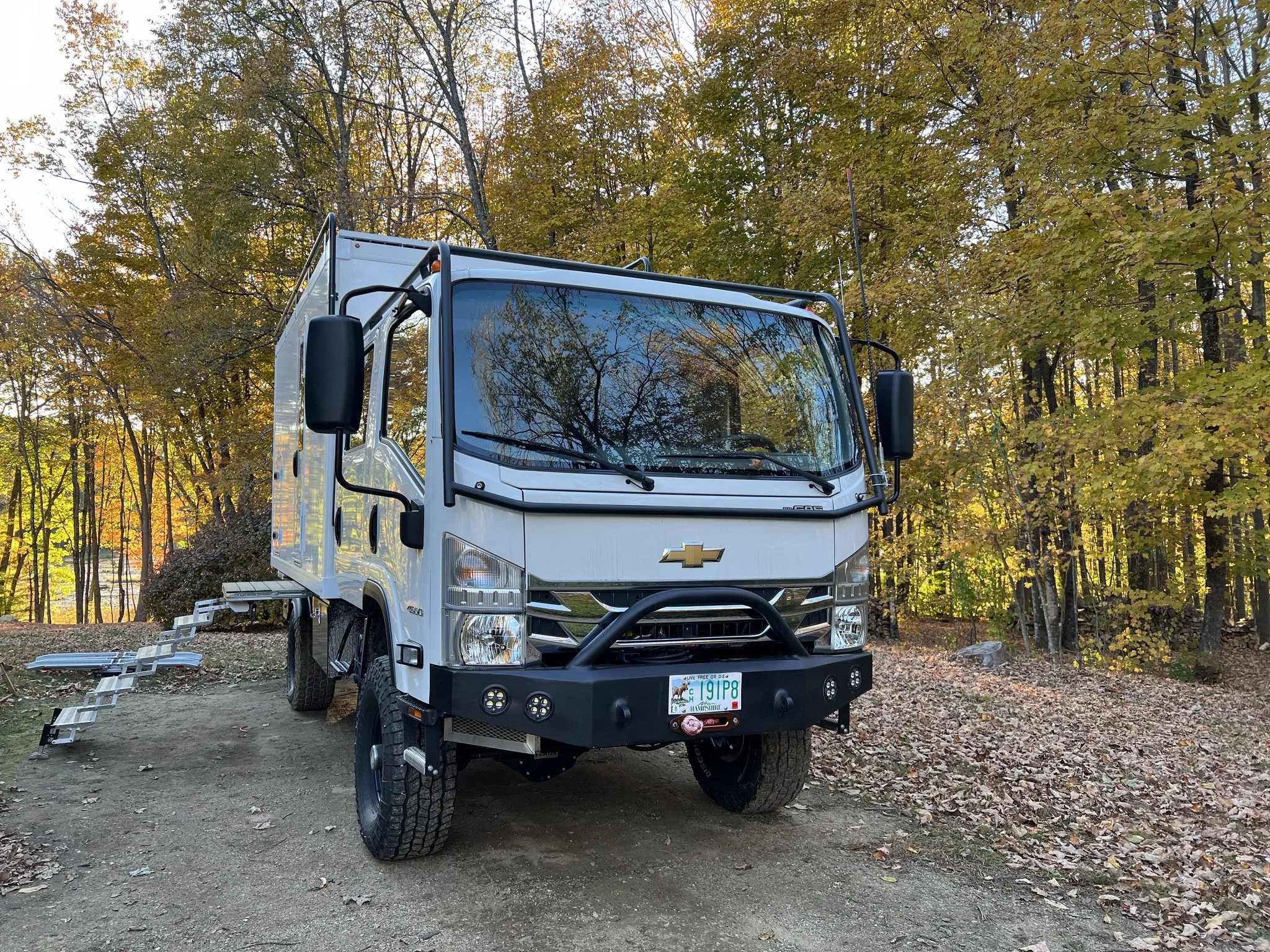
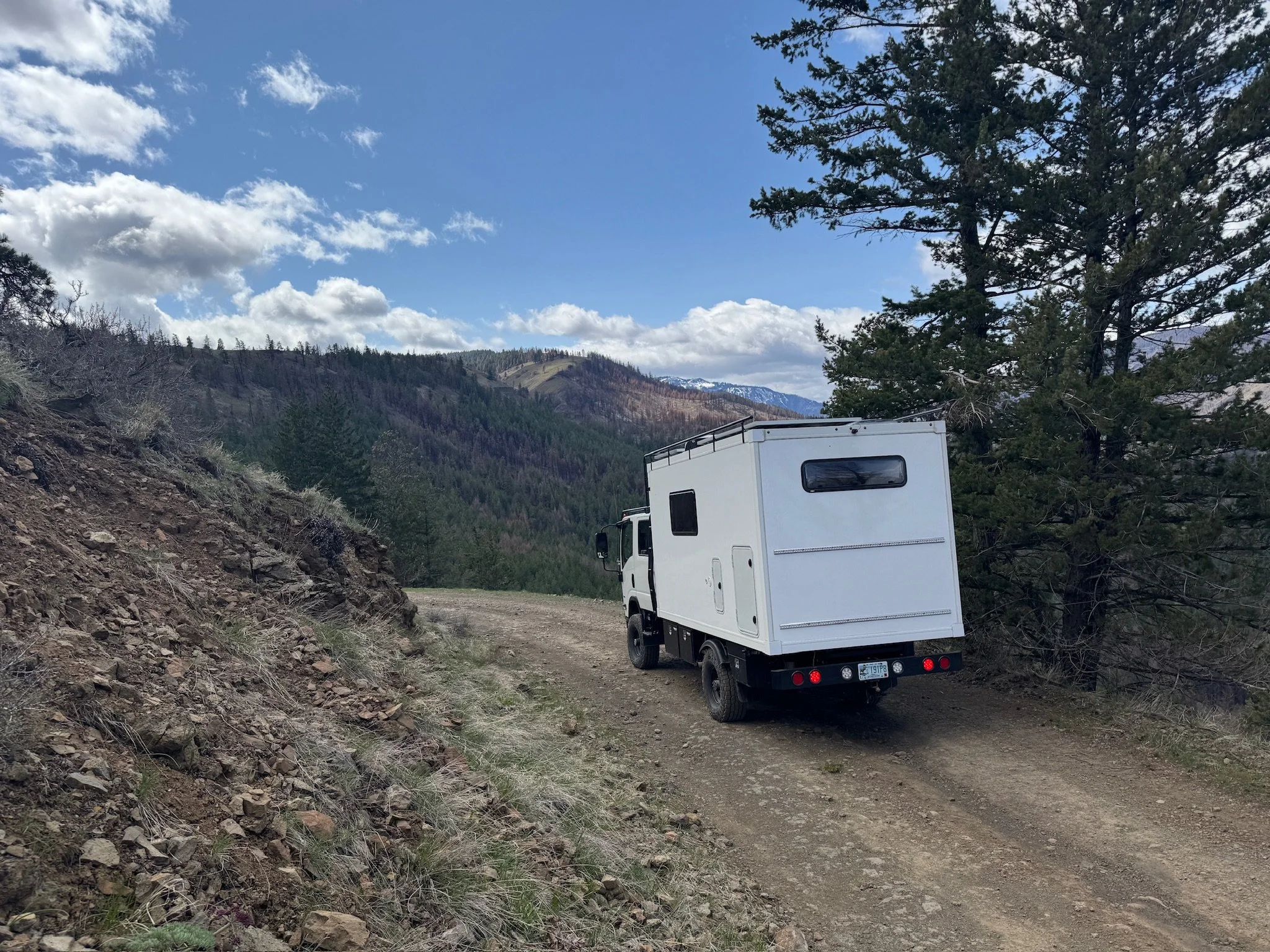
When we acquired Rufus, our expedition truck to be, it came with a factory front bumper but lacked any rear protection. After evaluating available aftermarket options (expensive, heavy, and big), we quickly realized we needed a custom solution. We designed and built lightweight aluminum bumpers that integrate seamlessly with the truck and provide the protection we need. These bumpers are designed to house a winch, support off-road lights, and provide protection in the event of a light collision. Here's a detailed look at the process and considerations that went into the custom bumper fabrication.
Key Design Considerations for Custom Bumpers
Designing and building custom bumpers for off-road trucks involves a mix of functionality, durability, and style. Below are the key factors we considered for Rufus' bumpers:
Lightweight Construction
Weight is always a priority in expedition builds, as unnecessary mass can negatively impact handling, especially when mounted far from the vehicle's axle. We opted for aluminum bumpers to keep the overall weight to a minimum without sacrificing strength or reliability. Aluminum is known for its strength-to-weight ratio, making it an ideal choice for our bumper fabrication.Low-Profile Design
Off-road bumpers should blend with the vehicle’s aesthetic and not protrude excessively. Our goal was to create low-profile bumpers that would provide necessary protection without disrupting the truck’s lines or approach and departure angles.Winch Integration
A winch mount is crucial for any off-road vehicle. To ensure we could tackle difficult recovery situations, we designed both the front and rear bumpers with built-in winch spaces, allowing for future winch installation.Light Mounting
While nighttime off-road driving isn’t the primary goal, sometimes it’s necessary. The front bumper was designed to hold fog lights and spotlights. The rear bumper integrates taillights and license plate lighting, ensuring a clean and functional design for nighttime visibility.Protection and Durability
While bumpers are primarily sacrificial in light accidents, they also serve to protect the vehicle's vital components in harsh off-road conditions. Our bumpers are designed to absorb impacts while remaining easily replaceable if needed.Maintenance Considerations
The crew cab on Rufus doesn’t tip for regular maintenance, meaning there was no need for hinged bumpers. The focus was on creating easily removable bumpers that wouldn’t interfere with major maintenance if necessary.
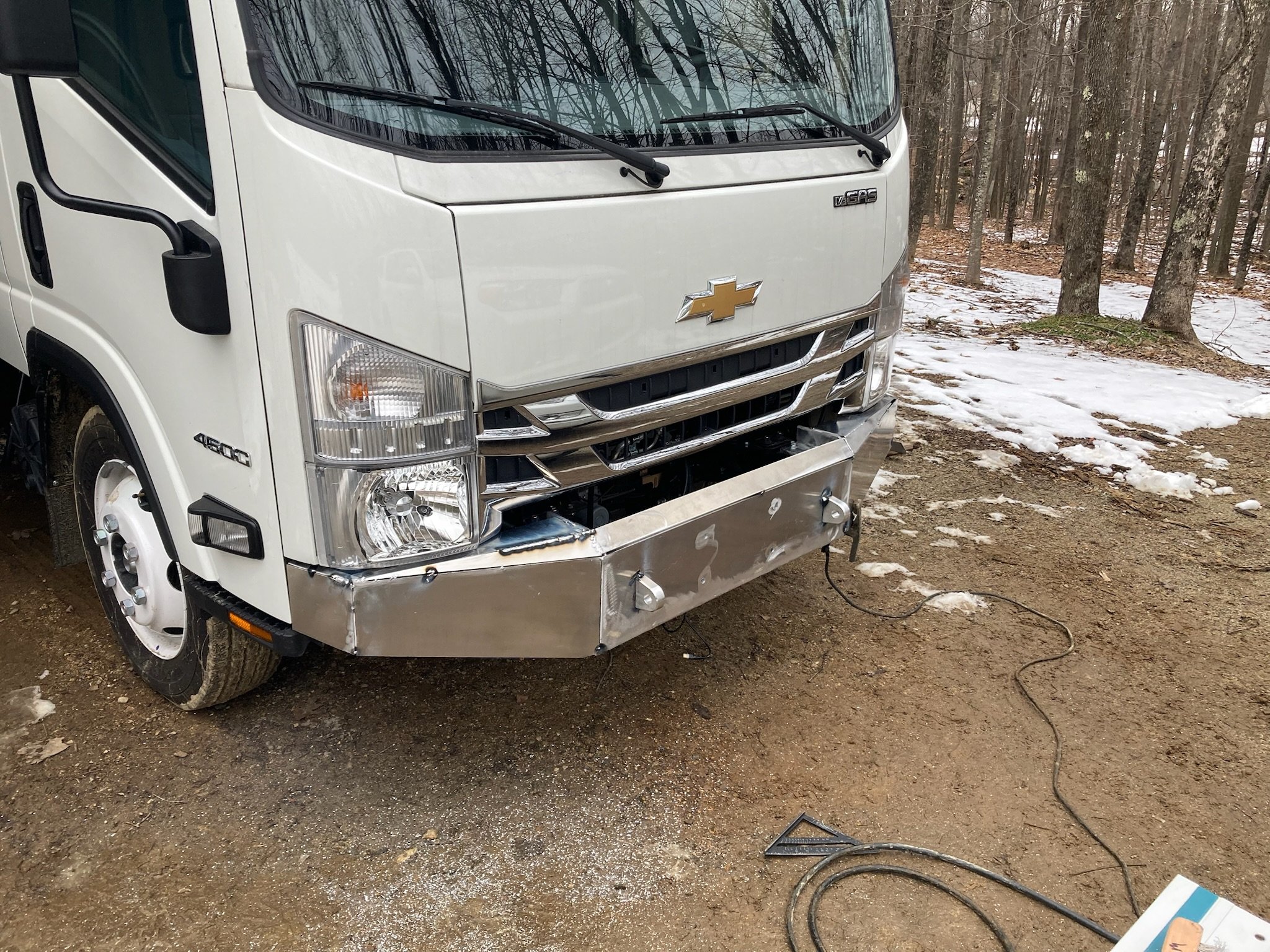
Fabrication Process & Materials
In the U.S., custom bumpers for off-road trucks are often oversized and heavy, which didn’t meet our needs. Drawing inspiration from global designs and DIY bumper fabrication projects, we decided to build bumpers specifically for Rufus.
Why Aluminum?
To keep the bumpers lightweight and strong, we chose aluminum, a material that is both durable and low in weight compared to steel. Here’s a breakdown of how we constructed each bumper:
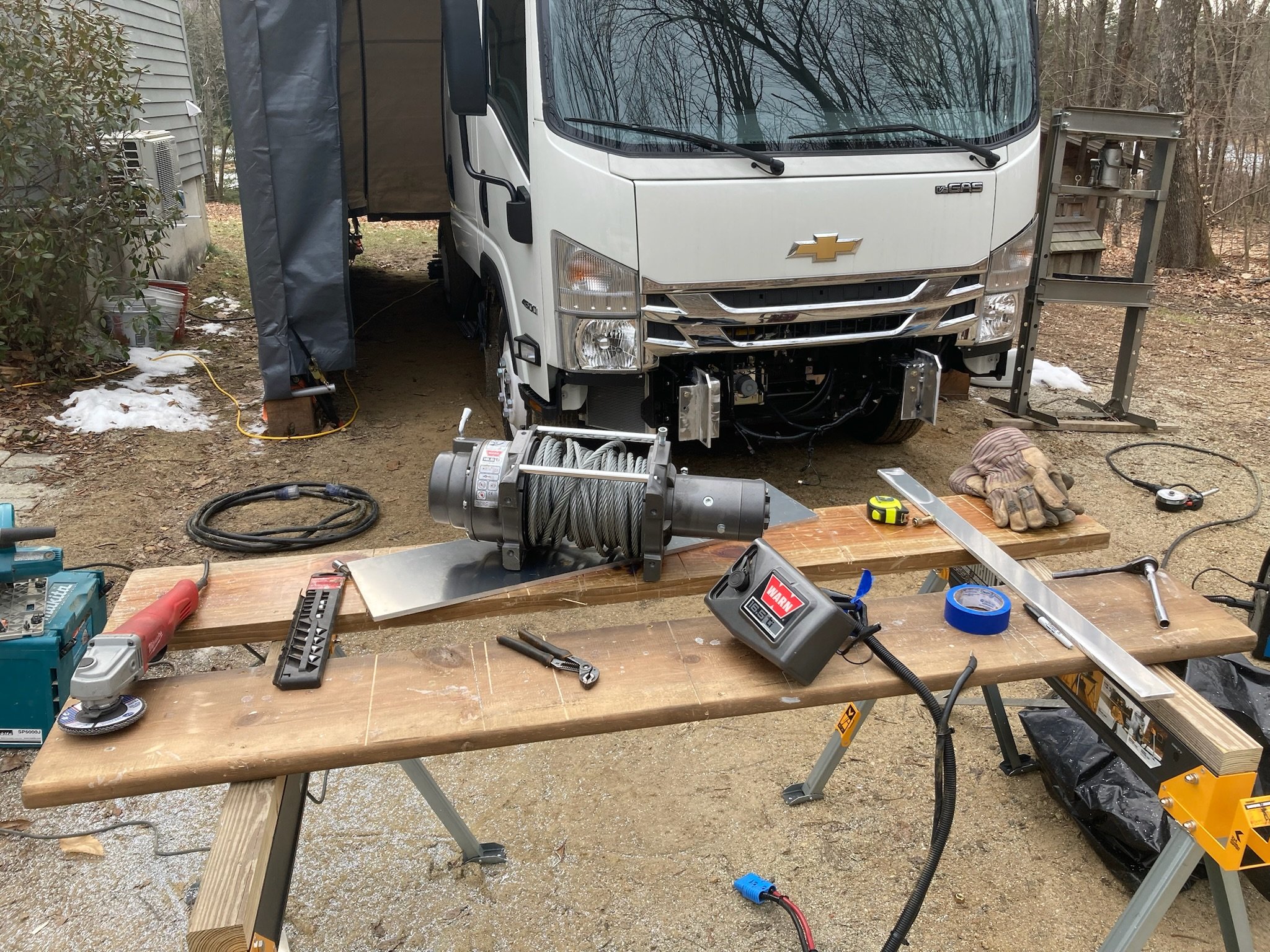
Front Bumper Design
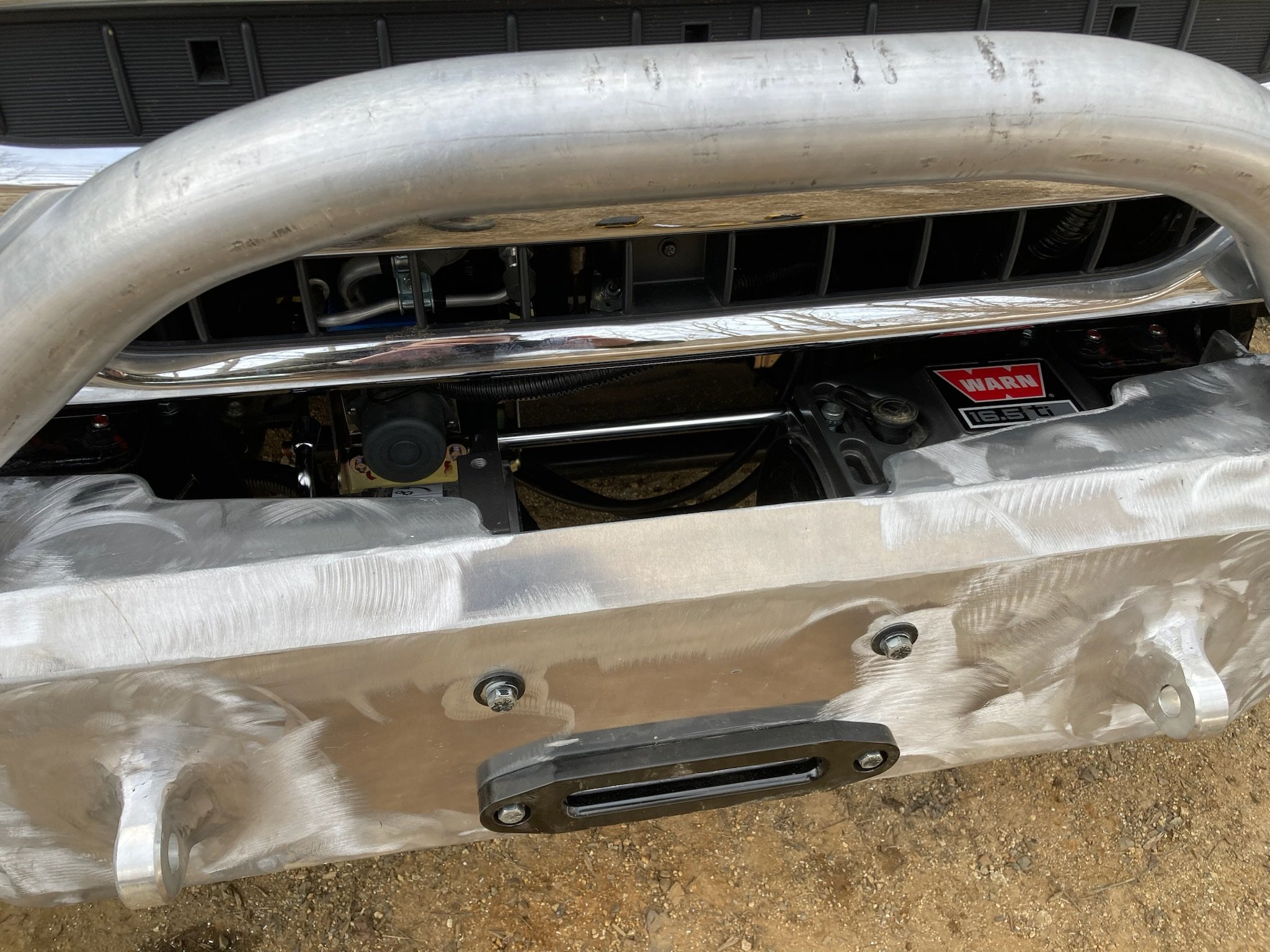
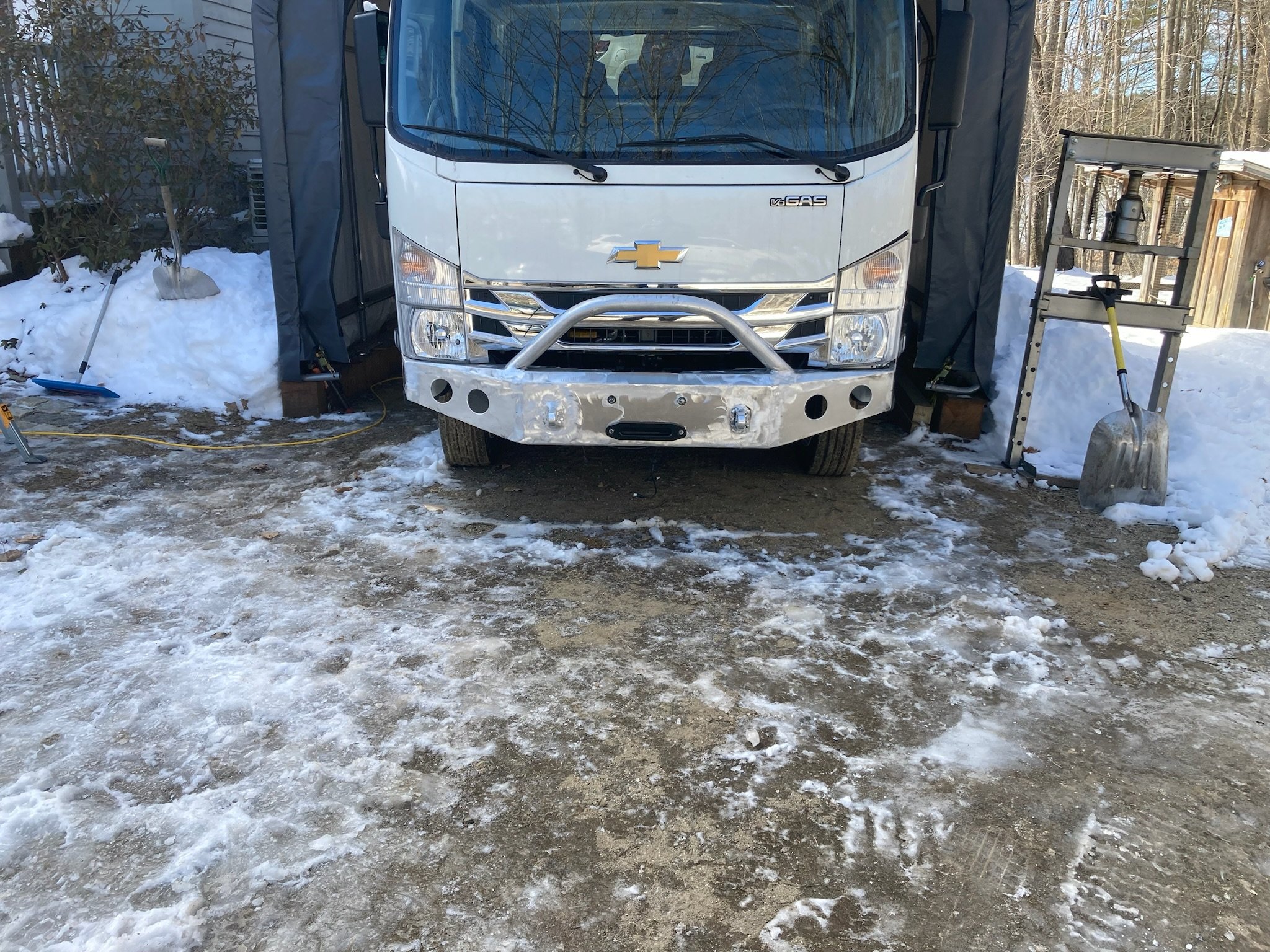
Winch Cradle: Constructed from 3/8” aluminum plate, the winch cradle is designed to bear the weight of the winch while maintaining the lightweight nature of the bumper.
Side Wings & Light Mounts: 1/8” aluminum plate was used for the side wings and light mounts to keep weight minimal and functionality high.
Hoop Construction: The front hoop is made from 2” Schedule 40 pipe, offering additional protection and strength for the front end of the truck.
Recovery Points: Two pad eyes were welded to the winch plate for off-road recovery, enabling us to pull or double the winch line for difficult recoveries.
Rear Bumper Design
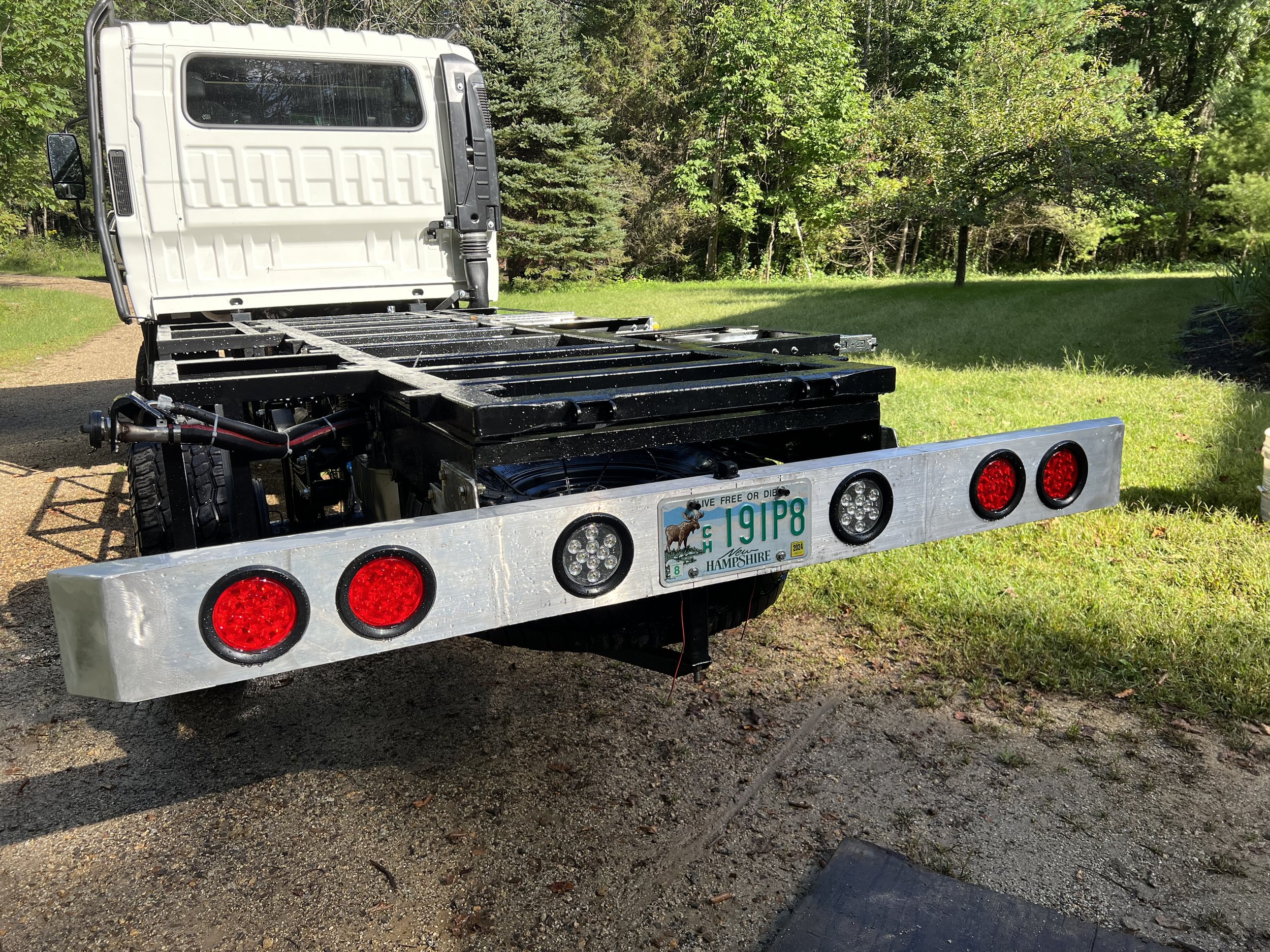
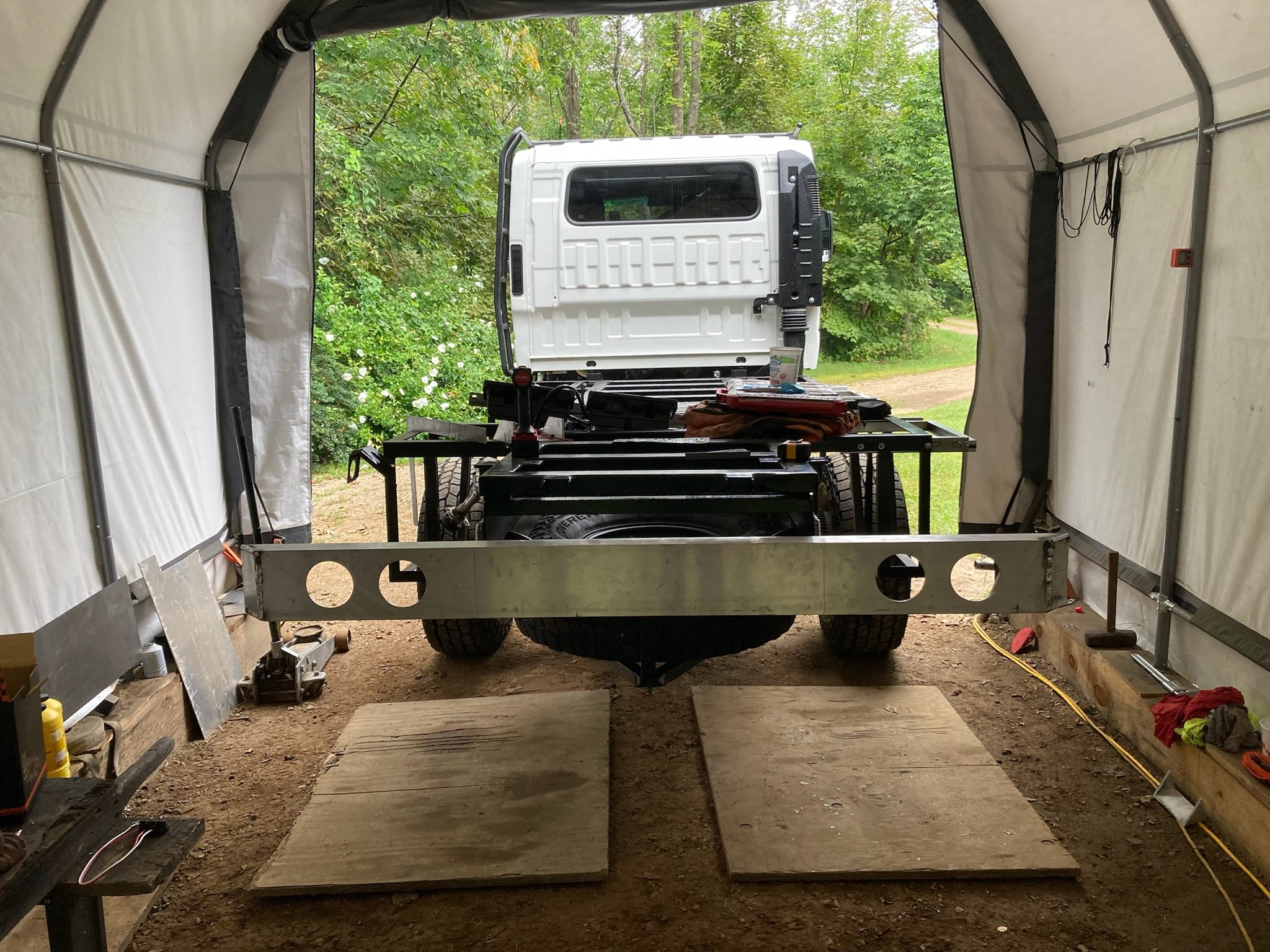
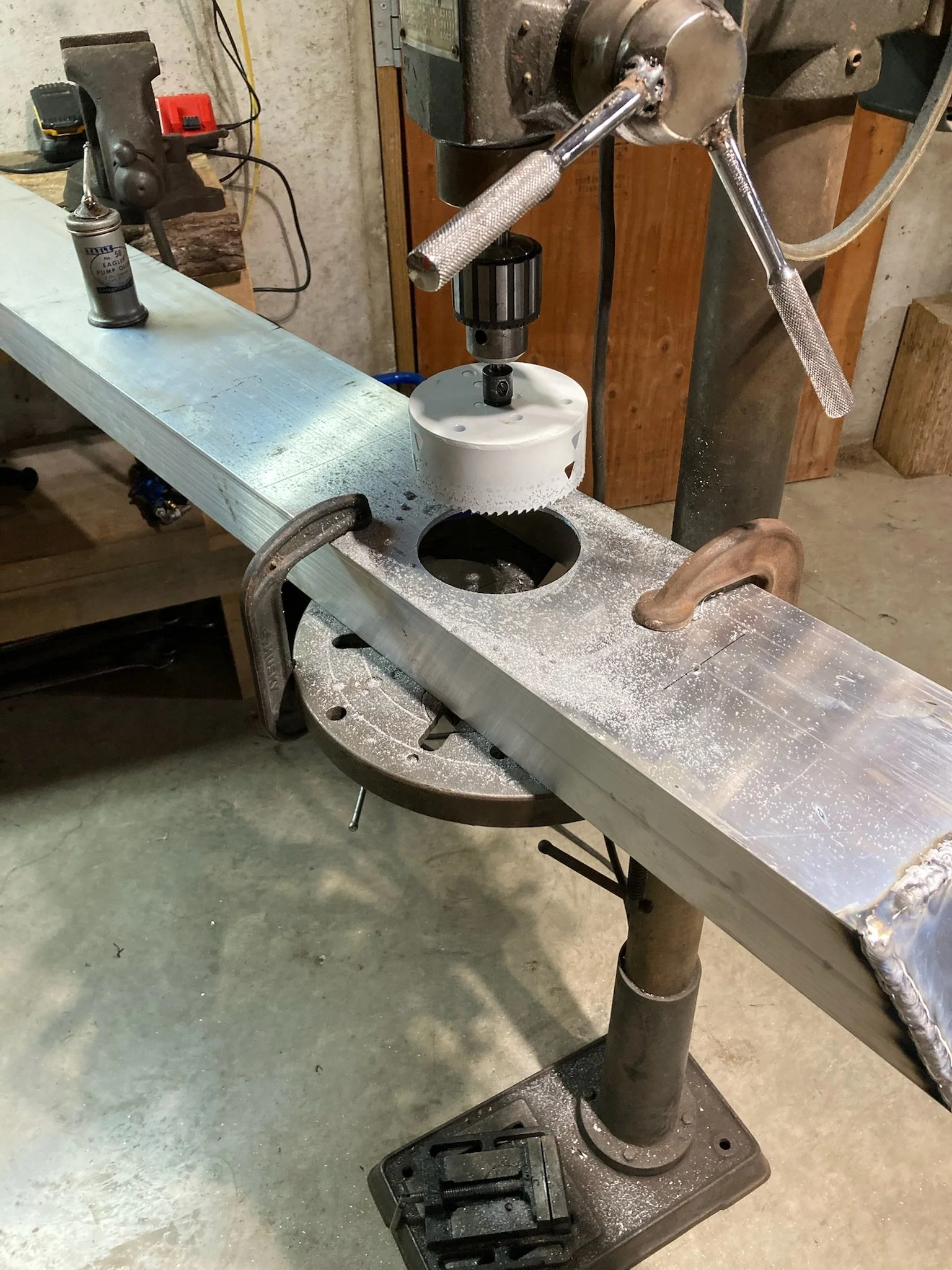
Base Material: The rear bumper starts with an 8” aluminum C-channel, with web stiffener plates welded on the back for added strength.
Frame Attachment: We used ¼” aluminum plate to create solid brackets that secure the bumper to the truck’s frame.
Receiver Hitch: A steel 2” receiver hitch was integrated and bolted onto the rear bumper for light duty towing capabilities.
Taillights & License Plate Mounting: The rear bumper houses 6” round LED taillights and integrates the license plate light into the securing bolt.
Winch Mounting Space: Though we didn’t install a winch at the rear, the design ensures there’s room for one in the future.
Rearview Camera:
The rearview camera is mounted on the top of the bumper with double-sided tape for easy installation and optimal viewing.
Performance & Testing

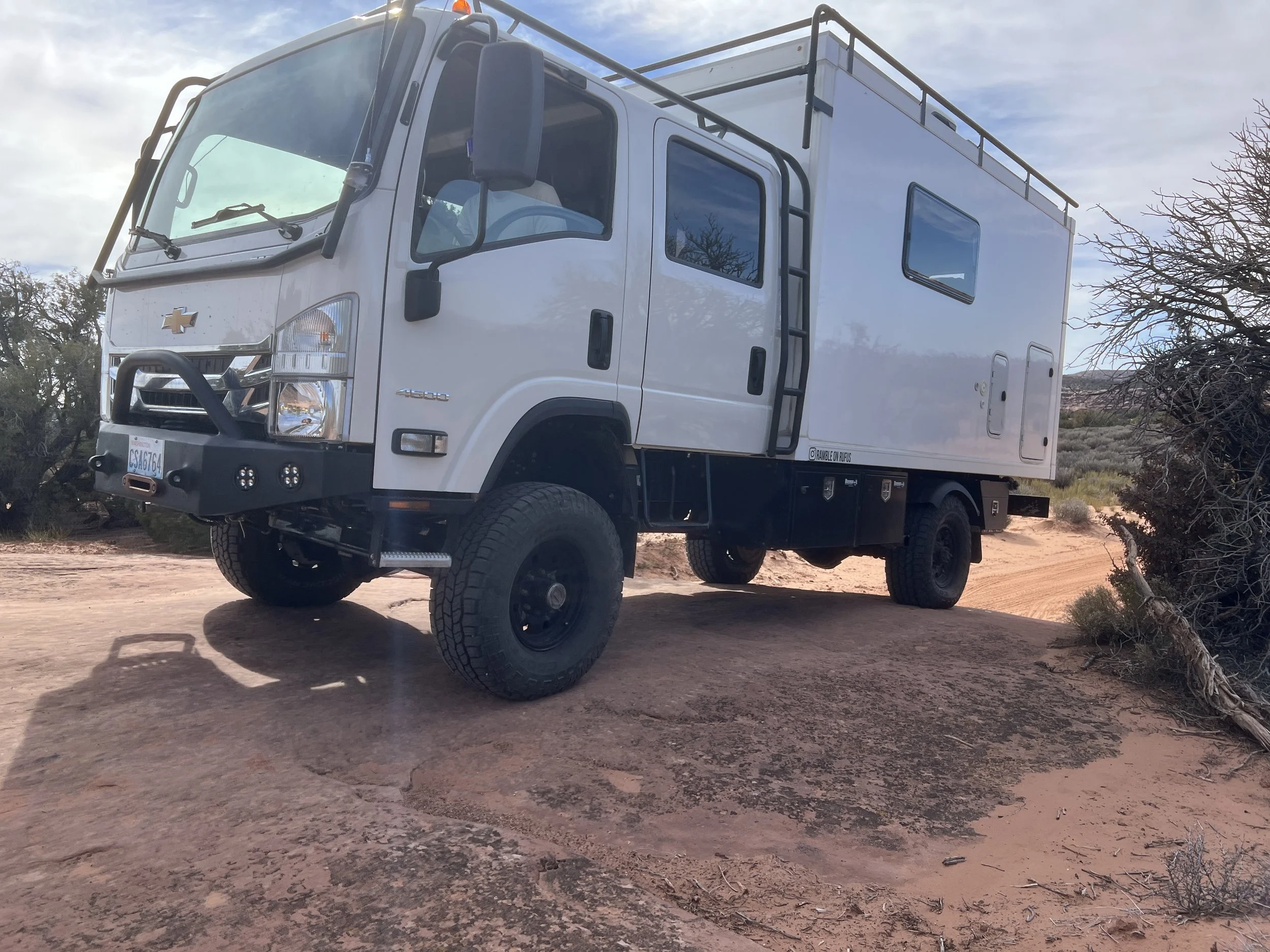
After completing the aluminum bumper fabrication, the bumpers have proven to be both functional and durable. They’ve already been tested under real-world conditions:
We successfully used the front winch cradle to pull a fully-loaded F350 camper out of the mud. Despite the heavy load, the bumper performed flawlessly, and the winch cradle remained intact.
As this was my first aluminum fabrication project, there was a learning curve, but the results exceeded expectations. We went from raw materials to a fully functional bumper setup with no formal design plans, relying on trial and error and real-world testing.
The custom bumpers for Rufus are an excellent example of how a tailored design can significantly enhance the performance and appearance of an off-road truck. By using lightweight aluminum and focusing on functionality, we were able to create bumpers that support winch recovery, integrate lighting, and provide the protection needed for off-road adventures.
These bumpers are built for the long haul—strong, serviceable, and adaptable to future upgrades. The combination of form, function, and fabrication ensures that Rufus is ready for whatever challenges lie ahead.
